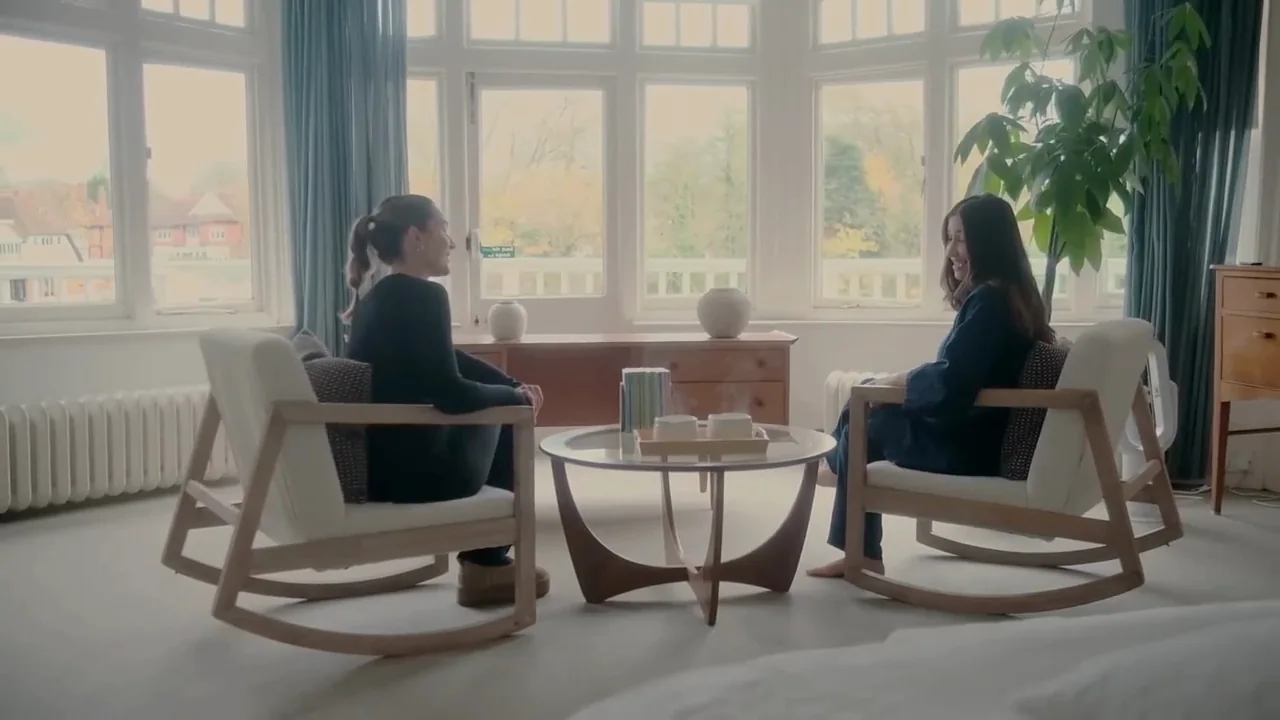

At the house · five minutes
Choosing a wellness retreat near London
A short list of what actually matters when you are weighing up where to spend a weekend meant for rest, and what tends to be noise.

There are more wellness retreats within reach of London now than there were even five years ago, which is good news in principle and slightly overwhelming in practice. Search results blur together quickly: similar photographs, similar language, similar promises of stillness and renewal. Choosing well comes down to a handful of practical questions that most listings do not answer directly, and that are worth asking before you book anywhere.
Distance changes what a retreat can be
The first question is simply how far you are willing to travel, and it matters more than it looks. A retreat that requires a flight asks something different of you than one you can reach by train in under an hour. The travel itself becomes part of the experience, for better or worse: a long journey can feel like a proper departure from ordinary life, but it also raises the stakes of the whole trip, and makes a short weekend hard to justify against the time spent getting there and back.
A retreat within easy reach of London, on the other hand, lowers the barrier to actually going. Maidenhead sits on the Elizabeth line, direct from Paddington in under an hour, which means a genuine change of pace is available without needing to clear a week in the diary or commit to a long haul. That proximity also makes it realistic to return more than once, which matters if what you are looking for is a rhythm rather than a single, memorable event.
What is actually included, not just the room
Most retreat listings lead with the room, and the room matters, but it is worth reading past it to what a stay actually includes. Is there a daily practice built into the day, or is everything an optional extra bolted onto a fairly ordinary hotel stay? Are meals part of the offer, and if so, are they treated as an afterthought or as part of the programme itself? Is there a proper studio with a working weekly class schedule and named practitioners, or a single generic yoga mat gestured at in the brochure copy?
At the Club, this distinction shows up in the two ways a stay can be booked. The Stay includes the room, the shared spaces, a daily guided practice and the general house rhythm. The Curated Stay adds guided morning and evening practices, and a schedule curated with you in advance. Neither is dressed up as more than it is, and knowing which one you actually want, quiet space to use as you please, or a fuller, guided structure, is worth deciding before you arrive rather than working out once you are there.
The difference between a spa day and a retreat
A spa day and a retreat solve different problems, and it is easy to book one when you actually want the other. A spa day is built around a handful of treatments in an afternoon, in and out, pleasant but brief. A retreat is built around time: an overnight stay, at minimum, long enough for the day to actually slow down rather than simply relax for an hour before returning to traffic. If what you are after is a genuine change of pace rather than a pleasant afternoon, the overnight stay tends to be the part that makes the difference, not any single treatment within it.
Scale matters here too. A handful of rooms and a garden studio with real, named practitioners will feel different from a large hotel with a spa wing attached, and neither is wrong, but they suit different needs. Smaller, more intimate settings tend to suit anyone who finds a crowded, echoing spa harder to relax into than a quiet house with a small number of other guests, and a small number of rooms usually means the daily rhythm, meal times, class sizes, the general pace of the place, stays consistent rather than shifting with whichever coach party happens to be passing through that week.
Questions worth asking before you book
A short, practical list helps more than any amount of marketing language: How far is the journey, realistically, door to door? What is included in the nightly rate, and what costs extra? Is there a genuine daily structure, or is it left entirely up to you to build one? Are the classes and practitioners named and real, or vaguely described? And does the cancellation policy make sense for the way your own diary actually behaves, given how often plans in a demanding job or a full family calendar move at short notice?
None of these questions require a difficult conversation with whoever is running the retreat. A place confident in what it offers will usually answer all of them plainly, without needing to be pressed.
Making the decision easier
None of this is a case against looking around. It is a case for looking with a clearer set of questions than the photographs alone will answer. If you want the evidence behind why proximity, rhythm and repeat visits matter more than a single dramatic trip, the research the Observatory is building on women's burnout and recovery goes into that in more depth than a Club page reasonably can.
If, having asked the questions, a quiet stretch of the Thames close to London still sounds like the right answer, the experience here is built to hold up to exactly this kind of scrutiny, and a stay is the simplest way to find out whether it suits you.
Stay the night
Everything above reads differently from a room a few steps from the water. Come for one night or a long weekend and let the river set the pace.
Book a stayFrom the Observatory
The River Arts Observatory turns questions like this into ongoing research, with the women who take part in it. Read its insights.