
River Arts Club
—for intentional rest and regeneration.
3 Strength & Slow Movement: Rebuilding Capacity
When energy is low, the instinct is often to push harder.
Exercise more.
Train harder.
Increase intensity.
Yet for many women experiencing burnout, this approach can deepen fatigue rather than restore vitality.
The So Lab Method instead explores a different relationship with movement.
Not movement as performance, but movement as restoration.
Across our pilot cohort, participants frequently arrive with physical patterns that mirror nervous system stress.
Tight shoulders.
Restricted breathing.
Postural collapse.
Low muscular engagement.
These patterns are not simply musculoskeletal.
They reflect the body adapting to prolonged periods of cognitive load and sedentary work.
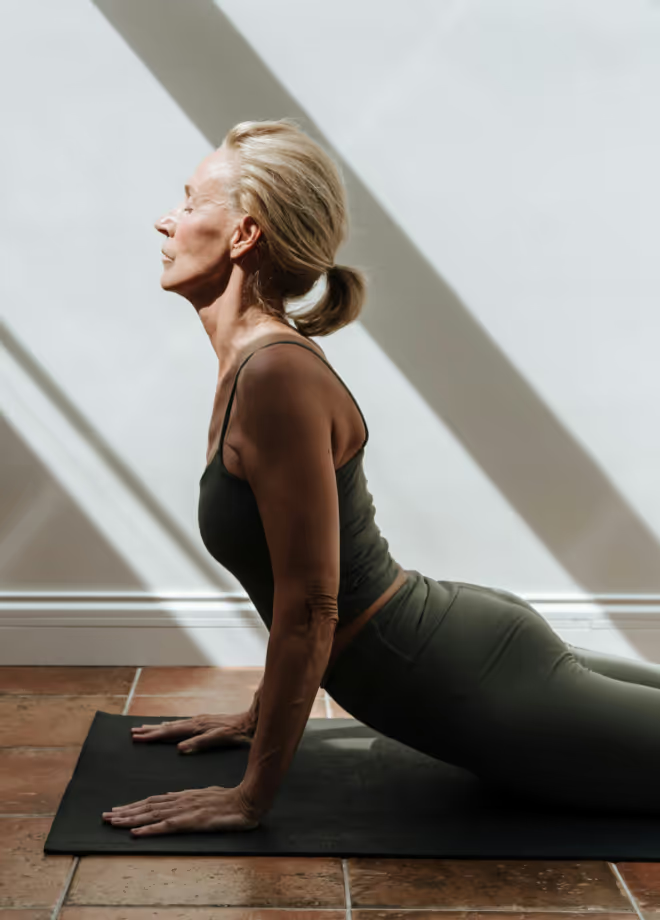
Slow strengthening movement offers a way to reverse this pattern.
Research increasingly highlights the importance of resistance training for women, particularly during midlife when hormonal shifts influence muscle mass, bone density and metabolic resilience.
But intensity is not always required.
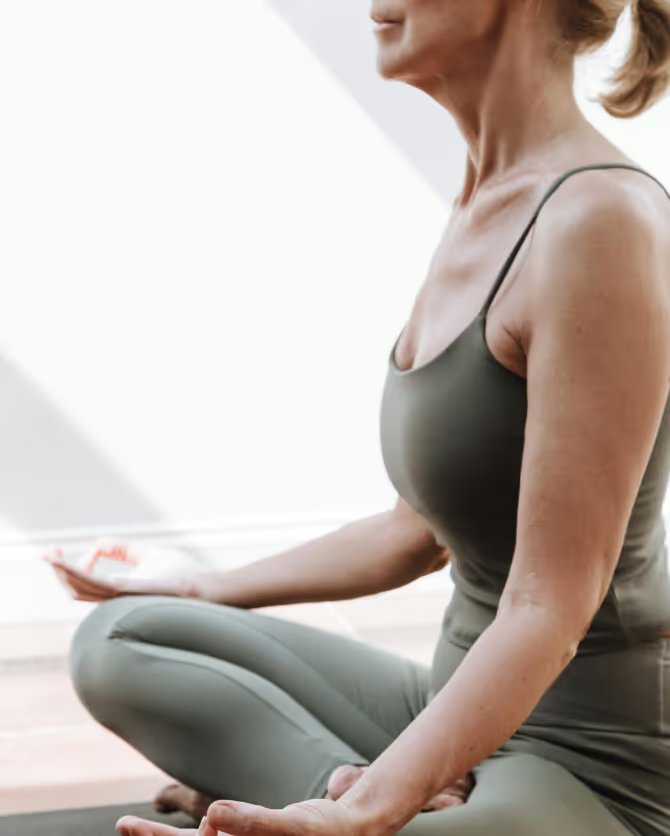
Slow, controlled strengthening movements allow muscles to engage while the nervous system remains regulated.
Breath remains steady.
Attention remains present.
Participants often describe these sessions not as exercise, but as a return to inhabiting their bodies again.
Over time, this form of movement appears to restore both physical and mental capacity.
Posture improves.
Breathing deepens.
Energy stabilises.
Rather than draining the system, strength becomes a form of regulation.
Practices explored in this pillar
Slow strength training
Pilates-based stabilisation
Postural release work
Breath-led movement
Somatic awareness
Observations informing our work
Within the pilot cohort, participants frequently report increased energy and mental clarity after slow strengthening sessions.
These observations align with research showing that resistance training supports metabolic health, mood regulation and cognitive resilience.
At River Arts Club, movement is therefore not positioned as performance.
It is positioned as a quiet rebuilding of capacity.






Join our community
Sign up to our mailing list to receive simple rituals, upcoming workshops and reflections from the river – written occasionally and with intention.