
On the river · five minutes
Bray, Cookham and the villages you can reach on foot
Three villages, two directions, and no need for a car if you are willing to walk the lanes and towpaths between them.
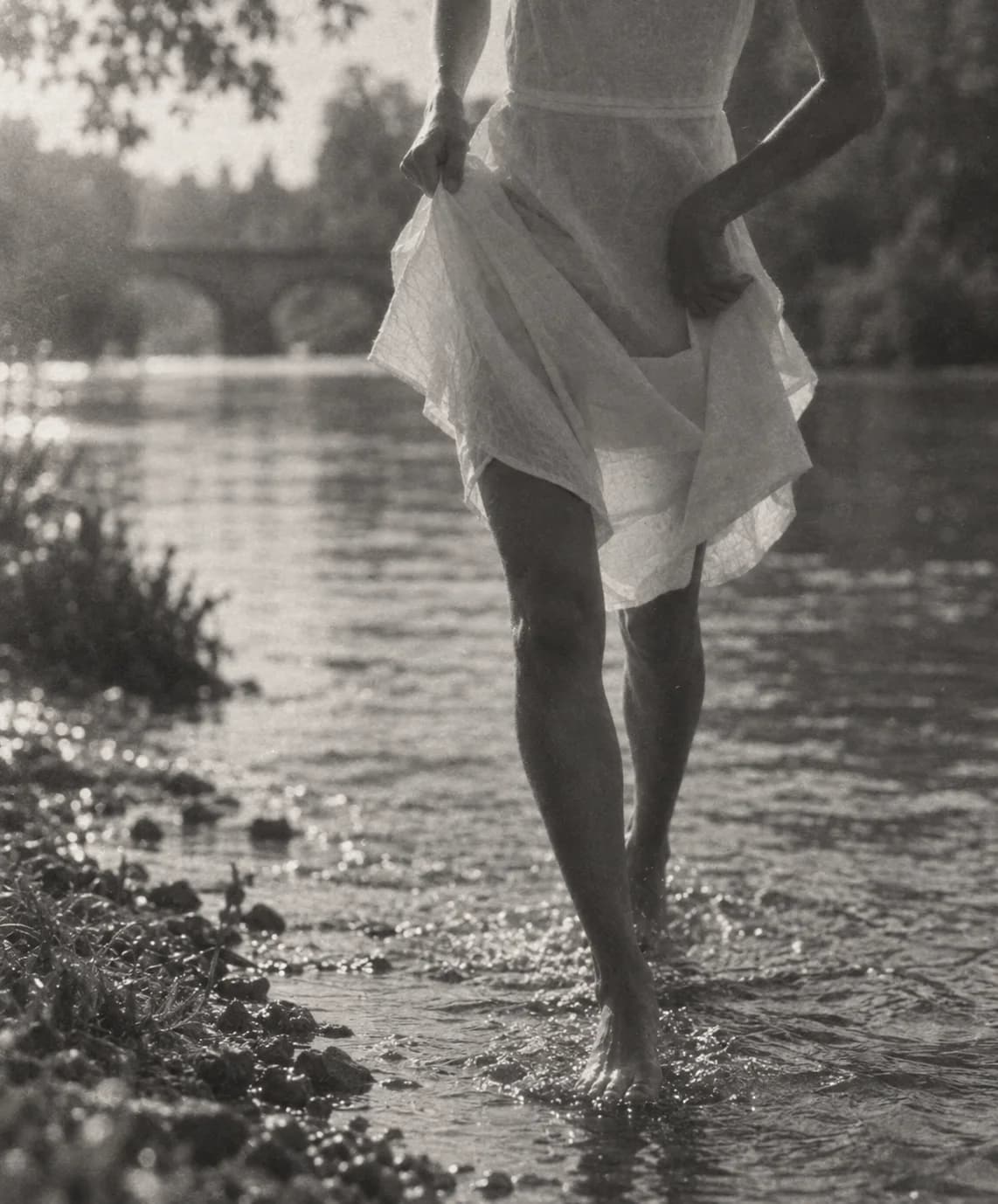
Walking barefoot at the river’s edge
Maidenhead sits between two villages that could not be more different from each other, and both of them are close enough to reach without a car. Bray lies downstream, a cluster of timbered cottages that happens to hold an unlikely concentration of some of the country's best-known kitchens. Cookham lies upstream, quieter, more painterly, content to be known for a single artist and a wide green moor. Between the three of you have most of what a slow day on this stretch of the Thames has to offer.
Bray, a village that punches above its size
Bray is a sixteenth-century village of narrow lanes and low doorways, easy to miss if you are driving through rather than walking it, and easy to fall for once you slow down enough to notice the detail: the church, the almshouses, the timber frames leaning gently after a few hundred years of settling. It has become known well beyond Berkshire for its restaurants, Heston Blumenthal's Fat Duck among them, and the Waterside Inn on the water's edge a little further along, both long-standing names in British food that draw visitors who might otherwise never have found their way to a village this size. You do not need a table anywhere in particular to enjoy walking through it. The food reputation simply explains why a village this small has quite so many people wandering its lanes on an ordinary afternoon.
The walk from Maidenhead follows the river for most of the way, past Bray Lock and the boatyards that line this stretch, before the path turns in towards the village itself. It is an easy, flat walk, well within reach on foot, and one that rewards an unhurried pace: there is little here that benefits from being rushed.
Beyond the kitchens, Bray has its own quiet history worth a slower look. St Michael's Church dates back to the thirteenth century and holds the tomb of William Goddard, the merchant who in 1627 founded the mellow brick almshouses known as Jesus Hospital, still standing in the village and still cared for under the same charitable trust he set up. The village also gave its name, by way of a former vicar who is said to have changed his religious allegiance with whichever monarch was on the throne, to one of the better-known old English songs, a bit of local mischief that Bray seems happy enough to be remembered for.
Cookham, upstream and unhurried
Cookham sits on the other side of Maidenhead, reached either by road or by following the Thames Path north along the river, past Boulter's Lock and the wooded slopes below Cliveden. It was home to the painter Stanley Spencer for almost his entire life, and the village still carries his presence lightly: the Stanley Spencer Gallery in the old chapel on the high street, and Cookham Moor beyond it, the wide common he painted so often that it is difficult now to look at the moor without thinking of his canvases.
Where Bray announces itself, Cookham tends to stay quiet about what it has. The high street is short, the pace unforced, and the moor at the edge of the village gives the whole place room to breathe that a more built-up village would not have. It suits an afternoon rather than a morning: better with the light going soft, better with nowhere else you need to be.
A few of the shopfronts and cottages along the high street would still be recognisable from Spencer's paintings, which is part of what makes the village feel less like a heritage attraction and more like somewhere that simply carried on being itself while a great artist happened to live there.
Linking the two into one day
A full day taking in both villages is possible on foot for anyone with good legs and no fixed schedule, though most people find it easier to treat them as two separate excursions rather than one long loop. Bray suits a late morning start, since the walk there and back leaves the afternoon free; Cookham suits starting a little earlier, since the moor and gallery are worth lingering over once you arrive.
What both walks share is the sense that Maidenhead itself sits at the centre of something larger than it first appears; a town with two distinct, characterful villages within easy walking reach in opposite directions, joined to it by the same river that runs past the Club. It is a rare enough arrangement to be worth using properly rather than driving past.
Neither walk needs much in the way of equipment beyond comfortable shoes and, in Bray's case, an appetite you have not already spent. Both villages are small enough to see thoroughly without a plan, which is perhaps their greatest advantage over the more organised attractions further along the river. You are free simply to wander until you are ready to stop.
Ending the day back at the water
Whichever village claims your afternoon, the walk back along the river tends to be the best part of the day rather than an afterthought: quieter light, fewer people, the water doing whatever it does at that hour. It is not a bad argument for staying somewhere on the riverbank itself rather than commuting in from further afield.
If a day spent between Bray's kitchens and Cookham's quiet has left you ready to stop walking altogether, a room back at the Club is a short way from both, close enough that neither village ever really feels far from home.
Stay the night
Everything above reads differently from a room a few steps from the water. Come for one night or a long weekend and let the river set the pace.
Book a stayFrom the Observatory
The River Arts Observatory turns questions like this into ongoing research, with the women who take part in it. Read its insights.