
On the river · five minutes
Things to do in Maidenhead, from the riverbank
Start at the water's edge in Maidenhead and most of what matters within an hour of London turns out to be a walk, a towpath or a short drive away.
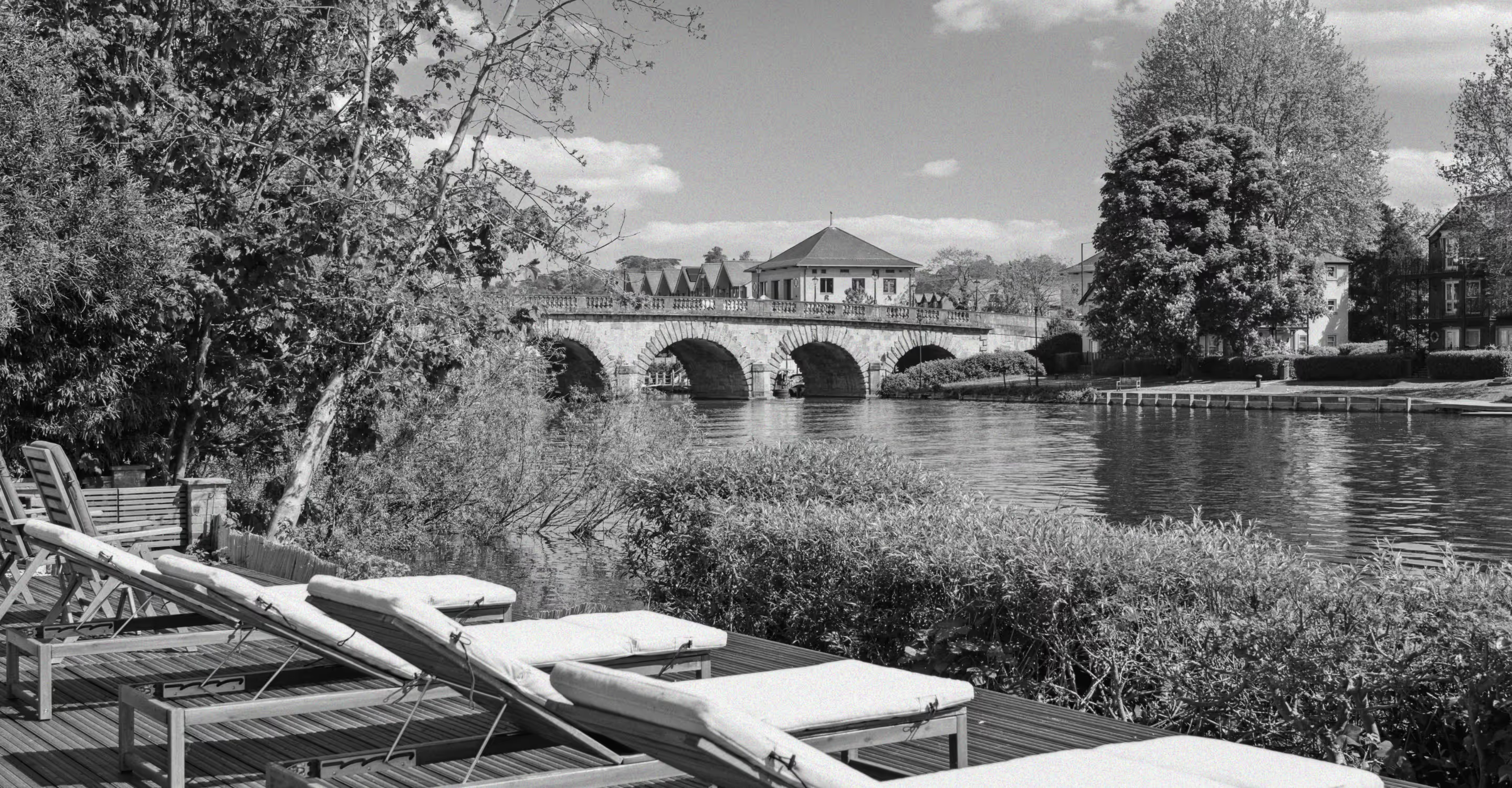
Maidenhead is often described by what it is close to: London, Heathrow, the M4. That is fair, and useful if you are planning a journey. It is also the least interesting thing about the town, because Maidenhead's real address is the river. The Thames arrives from Cookham in a wide, unhurried curve, slides under Maidenhead Bridge, and carries on towards Bray and Windsor as if nothing else in the county mattered very much. Once you start thinking of the town this way, as a long riverbank with streets attached, the question of what to do here begins to answer itself.
Start at the bridge
Maidenhead Bridge is the obvious place to get your bearings, a handsome stone crossing that has watched the town grow up around it for more than two centuries. Stand on it for a minute and you can see most of the day's options laid out: towpath heading north towards Boulter's Lock, gardens and terraces along the bank, boats moving slowly in both directions. From here it is a short walk to the Club, tucked beside the water on Guards Club Road, which makes as good a base as any for working out where the river wants to take you.
Downstream and upstream both reward a wander, and neither direction has much traffic on it, which is rather the point. The towpath was built for barge horses, not cars, and it still feels that way: flat, obvious, and entirely without urgency. You do not need a map so much as a direction and an afternoon, and the river will do most of the deciding for you.
Maidenhead itself has a working high street a few minutes from the water, useful for the practical end of a stay, but it is the bank rather than the shops that repays a visitor's time. Cafés and pubs along the towpath make good staging posts if you are walking rather than driving between one stop and the next.
Boulter's Lock and Ray Mill Island, for an hour or two
A short walk north of the bridge brings you to Boulter's Lock, one of the busiest and most photographed locks on the whole river in its Edwardian heyday, when half of fashionable London was said to gather on the bank to watch the boats queue through on a summer weekend. It is quieter now, but the lock and its weir are still working, and the walk there and back is an easy way to spend a morning without committing to anything more ambitious. Beside the lock sits Ray Mill Island, a small public park on what was once the site of a working flour mill, its paths threaded between willows with the sound of the weir never far away. It suits a flask of coffee and no particular plan, and if the towpath has got into your legs by the time you reach it, it keeps going all the way to Cookham for anyone with the afternoon to spare.
Cliveden and Cookham, for an afternoon
Further upstream, the river runs beneath Cliveden, the National Trust's gardens and woodland set high on a chalk bluff above the stretch of water boatmen have long called Cliveden Reach, one of the loveliest and most sheltered on the whole Thames. The house itself, glimpsed through the trees, is now run as a hotel, but the grounds and the view down to the water are open to visitors, and the climb up from the riverbank through the woods is worth it for the view alone.
Cookham lies a little further on, a village that has somehow stayed a village despite its closeness to London. It was home to the painter Stanley Spencer for most of his life, and the Stanley Spencer Gallery, housed in the small chapel he attended as a boy, holds the largest public collection of his work. Beyond the high street, Cookham Moor opens out into the kind of wide, grazed common land that led Spencer to picture the whole village as a kind of cathedral, with the moor as its close. It is an easy place to spend an afternoon doing very little, which is more or less the appeal.
Windsor and Marlow, if you have the day
With a full day rather than an afternoon, Windsor and Marlow both sit within comfortable reach. Windsor Castle, the Long Walk running south from its gates through Windsor Great Park, and Eton across the footbridge make for a proper day out, best done slowly and on foot once you arrive. Marlow, upstream in the other direction, has its own suspension bridge, its own lock and weir, and a high street built for unhurried browsing rather than a checklist.
Both towns are the kind of place people drive out to for the day from London. Coming from the Club, you get there without the drive, and you are back at the water in time for the evening rather than fighting traffic home.
Coming back to the water
The thread through all of this is the river itself. Wherever the day takes you, a lock, a gallery, a castle, a bridge, the Thames is what brought you there and what carries you back again, at least in spirit. It rewards slowness more than any itinerary can, and it is just as happy to be the whole point of the day as the route between other points.
If you would rather begin from the water than plan your way to it, the experience at the Club is built around exactly that rhythm: mornings by the river, afternoons wherever you choose to wander, and a room waiting when you are ready to stop. Staying the night means you are not racing a train timetable back to London. The riverbank is still there in the morning, and so, more often than not, is the mist.
Stay the night
Everything above reads differently from a room a few steps from the water. Come for one night or a long weekend and let the river set the pace.
Book a stayFrom the Observatory
The River Arts Observatory turns questions like this into ongoing research, with the women who take part in it. Read its insights.