

On the river · five minutes
Marlow, Hurley and the upper reach
Upstream of Maidenhead the Thames narrows, slows further still, and arrives at a bridge, a weir and a scattering of islands worth knowing about.
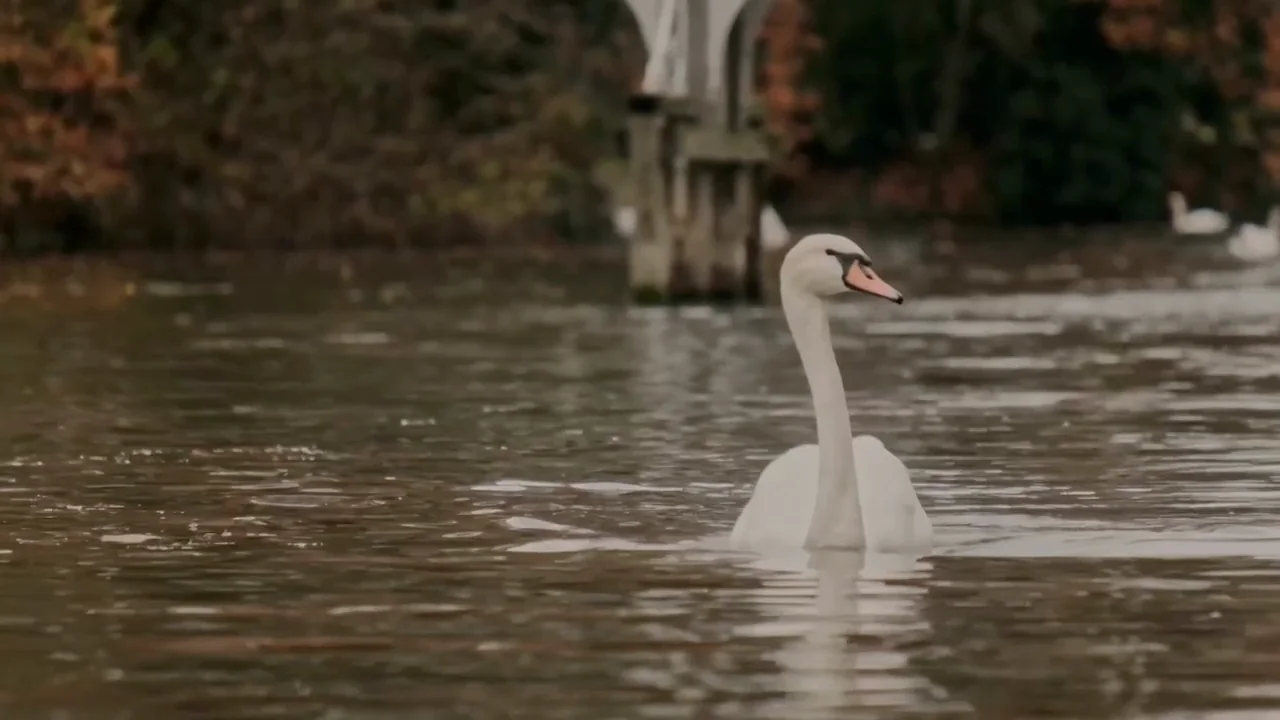
A swan on the river beside the Club
Follow the Thames upstream past Bourne End and the river begins to change character. The wide, working stretch through Maidenhead and Cookham gives way to something narrower and more wooded, a landscape of chalk hills closing in on both banks. Marlow sits at the heart of this upper reach, with Hurley a few miles beyond it, and together they offer a version of the river that feels a step further removed from London than the distance alone would suggest.
Marlow, upstream and elegant
Marlow's centre is built around its bridge, a graceful white suspension bridge completed in 1832 to a design by William Tierney Clark, the same engineer responsible for the Chain Bridge across the Danube in Budapest. It carries the road over the Thames a short way upstream of Marlow Lock, and the view from the bridge, back towards All Saints Church and the weir beyond it, is one of the more photographed on the whole river without ever quite feeling crowded.
The weir itself has been recorded on this stretch since the Domesday Book, though what stands today is a working modern structure rather than anything mediaeval, running several hundred yards above the lock and audible before it is visible. Marlow Lock, first built in the 1770s and rebuilt in the twentieth century, still handles a steady traffic of boats through the summer, and there are few better places on the river to spend twenty minutes doing nothing more than watching a lock keeper work.
Beyond the bridge, Marlow's high street has a settled, prosperous feel to it, worth a wander in its own right, though most visitors find the river remains the better half of the day. The path beside the weir gives the best vantage point on the bridge itself, and it is worth crossing to the far bank if only to see the church and the town from the angle the bridge was built to be admired from, rather than the angle most people arrive by car.
Rowers have trained on this reach for a long time, and it is not unusual to see a crew slicing past on an early morning, oars catching the light before the town has properly woken. The river narrows a little above the lock, which makes the current more noticeable here than in the broader pounds downstream, and gives the whole stretch a slightly livelier feel underfoot as well as on the water.
Hurley, a few miles further on
Where Marlow feels composed and a little formal, Hurley is looser and wilder. The village itself is small, but the river beside it splits into a scattering of islands, among them Hurley Lock Island and Magpie Island, formed where the Thames divides into several channels around the lock. Hurley Lock was first built by the Thames Navigation Commissioners in the 1770s, and the weir beside it draws paddlers and swimmers on a warm day, the water moving with a bit more life here than the calmer pounds further down towards Maidenhead.
The Thames Path threads through this stretch rather than around it, crossing footbridges between islands and offering a version of riverside walking that feels closer to the countryside than anything nearer town. It is an easy place to lose an hour simply following one channel and then another, with public paths and open ground on most of the islands themselves.
The village of Hurley itself sits just back from the water, small and largely unbothered by passing traffic, with a history as a Benedictine priory founded in 1086 that predates almost everything else on this stretch of river. Parts of the old priory buildings survive within the parish church and the houses around it. None of that history is signposted with any great fuss. It simply sits quietly behind the church, in the way a great deal of this part of Berkshire tends to carry its age lightly rather than making a display of it.
A change of pace, not just of place
What distinguishes Marlow and Hurley from the stretch nearer Maidenhead is less any single sight than the general slowing down of everything: fewer boats, narrower channels, hills rather than parkland framing the view. Coming here after a morning around Windsor, or as an alternative to it, gives a fuller sense of how much the Thames changes character over a comparatively short distance. The grandeur downstream, castles and grand estates, gives way here to something quieter and more domestic, villages built around their bridges and locks rather than around any single great house.
Both places are straightforward to reach from Maidenhead by car along the A404 and its connecting lanes, and neither requires a full day if time is short. An afternoon covers Marlow comfortably, and Hurley rewards even a shorter visit for anyone who mainly wants to see the islands and the weir.
Bringing the upper reach home
The upper reach is easy to treat as an extension of a stay based further downstream rather than a destination requiring its own overnight, and that is very much how it works best. A morning at Marlow's bridge, an afternoon among Hurley's islands, and an evening back on the water at the Club makes for one of the fuller and more varied days available on this part of the Thames, without ever asking for more than a short drive in either direction. The river does the rest.
Stay the night
Everything above reads differently from a room a few steps from the water. Come for one night or a long weekend and let the river set the pace.
Book a stayFrom the Observatory
The River Arts Observatory turns questions like this into ongoing research, with the women who take part in it. Read its insights.